Parent Alert June 2026
Breaking Down the DOJ and DEA Order to Reschedule Cannabis
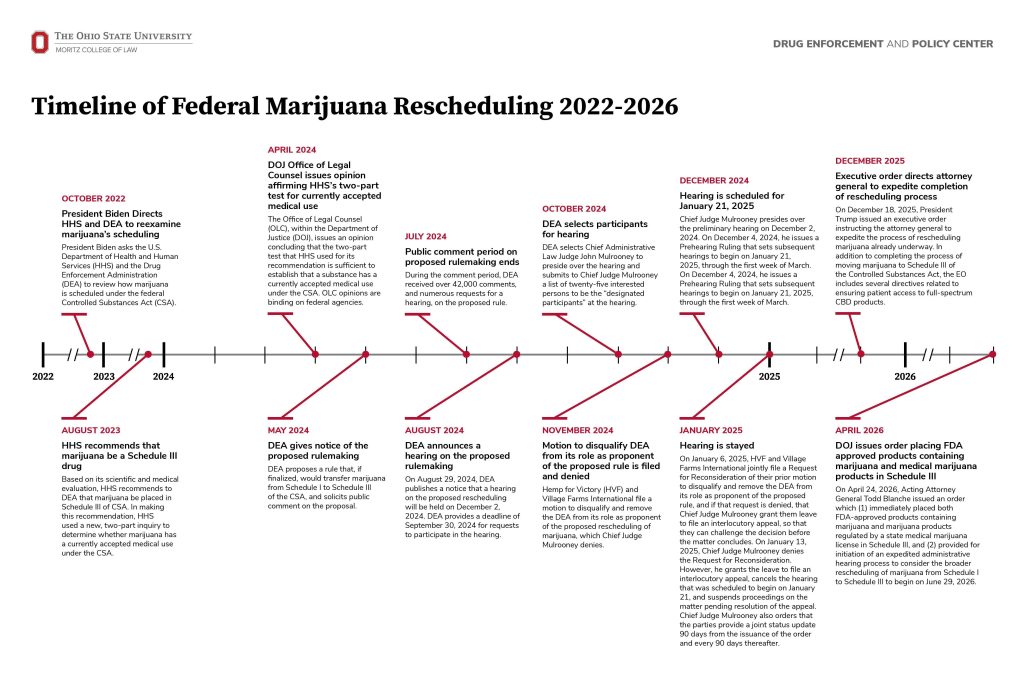
As of 4/28/2026, two cannabis categories were rescheduled to Schedule III of the Controlled Substances Act: FDA-approved cannabis products and state-regulated medical cannabis. This was part of a joint order issued by the U.S. Department of Justice and the U.S. Drug Enforcement Administration that was signed by Acting Attorney General Todd Blanche. A Notice of Proposed Rulemaking initiating an expedited administrative hearing process to consider rescheduling all cannabis to Schedule III accompanied the order. The DOJ and DEA cited President Trump’s Executive Order on Increasing Medical Marijuana and Cannabidiol Research and a desire to bring consistency and oversight to state-regulated cannabis as their reasonings for issuing this order.
What the Order Does
- Reschedules two cannabis categories to Schedule III
- Allows medical cannabis businesses to deduct ordinary business expenses. These deductions are not allowed with Schedule I and II substances.
- Makes state-licensed medical cannabis federally compliant. 40 states currently have licensed medical cannabis policies.
What the Order Does Not Do
- Legalize cannabis federally. Cannabis is still considered a Schedule I substance unless it is in the two categories that were rescheduled. Schedule I status still applies to state-legal recreational cannabis.
- Decriminalize possession offenses or expunge/modify any prior cannabis convictions.
- Allow federally insured banks to work with cannabis businesses. These banks are still subject to laws and regulations outlined in the Bank Secrecy Act’s anti-money laundering framework.
This order is significant because it is reframing the federal government’s approach to cannabis and reducing the perception of harm. As a reminder, Schedule I substances are defined as drugs with no currently accepted medical use and high potential for misuse, whereas Schedule III substances are defined as drugs with moderate to low potential for physical and psychological dependence. Rescheduling medical cannabis to Schedule III shows that the federal government considers cannabis to have an accepted medical use and sets a precedent that could make it easier for all cannabis to be rescheduled. The first step in the administrative hearing process for rescheduling all cannabis to Schedule III is set to begin on 6/29/2026.
The process to reschedule a substance is lengthy. There will be an update to this story when the process is completed and a final decision is made on whether cannabis is rescheduled. In the meantime, please check out the resources below to learn more about this latest order and how we got here.
Resources
U.S. Department of Justice – Justice Department Places FDA-Approved Marijuana Products and Products Containng Marijuana Subject to a Qualifying State-issued License in Schedule III, Strengthening Medical Research While Maintaining Strict Federal Controls
Hemp Gazette – Opponents File Lawsuit Challenging Federal Cannabis Rescheduling in U.S.
Reuters – Cannabis rescheduling arrvies, with limits: What the DOJ’s final order does and doesn’t do
U.S. Drug Enforcement Administration – Drug Scheduling
Ohio State University Moritz College of Law – Federal Marijuana Rescheduling: Process and Impact
The White House – Increasing Medical Marijuana and Cannabidiol Research
Cultural Awareness and Competence
Cultural awareness and competence sound similar, but they are distinct concepts that play crucial roles in understanding and respecting diverse cultures. These skills improve our relationships with others, create better workplace and school cultures, and improve outcomes with healthcare and prevention efforts. Understanding the difference between awareness and competence, and why they matter is the first step to improving ourselves and the world around us.
Cultural Awareness vs. Cultural Competence
According to CultureAlly, “Cultural awareness involves recognizing and appreciating the diverse differences and commonalities among cultures.” Building good cultural awareness requires us to examine our own cultural values, beliefs, and biases, and how those factors influence our perceptions and interactions with others. It also asks us to learn about other cultures so we can be conscious of the similarities and differences between our experiences and the experiences of others. Understanding the differences between cultures also helps us be more sensitive to the perspectives of others which allows us to work toward creating more inclusive environments.
CulutreAlly goes on to say that “Cultural competence goes beyond awareness to encompass the skills, behaviors, and attitudes necessary to effectively interact and work with people from diverse cultural backgrounds.” In other words, awareness is about gaining cultural knowledge and competence is about applying that knowledge. Competence leads to effective communication and interaction across cultures including active listening, empathy, adaptability, and modifying our behaviors to be appropriate and respectful in different cultural contexts. Cultural competence can also exist at an institutional level through policies, practices, and services that create inclusive and equitable environments.
How to Be More Culturally Aware
VeryWellMind says being culturally aware creates greater cultural competence, increased cultural sensitivity, better workplace culture, better healthcare, and better relationships. They have five steps you can take to become more culturally aware.
- Understand that it is a process: Becoming culturally aware does not happen overnight. It requires ongoing learning, conversations, and self-reflection.
- Ask questions: This includes asking yourself questions about how your culture influences your interactions with and perceptions of others as well as respectfully asking others about their cultures.
- Educate yourself: Be proactive, avoid assumptions, and expand your social network to include people form diverse backgrounds.
- Study the Cultural Competence Continuum Model: This is an assessment tool that can help people understand where they are at in their journey to being more culturally competent.
- Acknowledge your own bias: All of us have biases that are a byproduct of our culture and preconceived notions. Accepting that you have biases and learning to overcome them is a difficult but necessary part of the process.
Cultural awareness and competence go beyond improving our interactions with others and creating inclusive environments. These concepts also foster empathy, reduce prejudice, and enhance social cohesion which is crucial in a world that is becoming increasingly diverse. Check out the links below to learn more.
Resources
Culture Ally – What is Cultural Awareness?
Very Well Mind – Why Cultural Awareness Matters and How to Improve Yours
YouTube – Caregiving Network: Cultural Competence
Hidden in Plain Sight
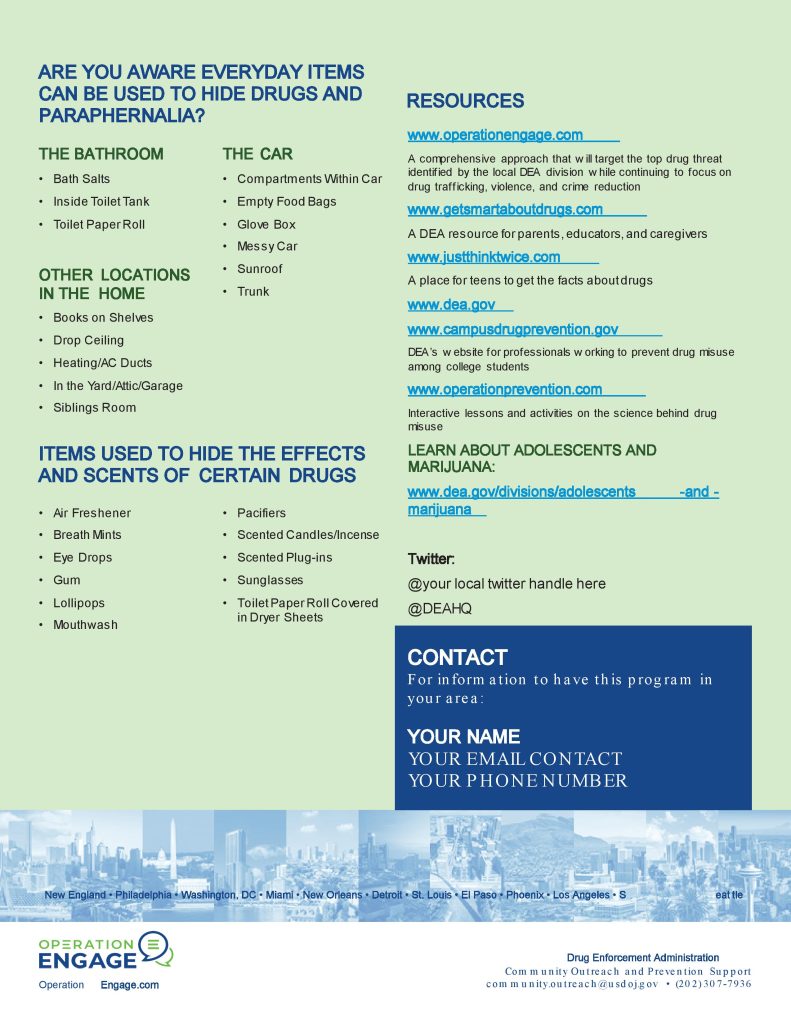
Hidden in Plain Sight (HiPS) is an interactive training designed to help adults, especially parents, be “in-the-know” about youth substance use. The training focuses on the signs and symptoms of substance use, the importance of knowing what is going on in your child’s life, how to talk to your kids about substance use, and resources for prevention, treatment, and support. This training can be overwhelming for parents but it is not meant to be a scare tactic. It is intended to give parents insight into what youth are likely to encounter and show them prevention tactics they can take to help their child make healthy choices.
HiPS sessions consist of an education portion, hands-on activity, and an activity debrief. Participants learn about different substances and their effects, warning signs of substance use including changes in appearance and behavior, and how to approach a situation in which they suspect their child is using substances. The hands-on activity has parents go through a mock bedroom and look for signs of drug use such as drug paraphernalia, messaging, and other indicators. Participants then do a debriefing session with the trainers to discuss what they found and what the different items are. The DEA HiPS video at the top of this article does a great job of walking you through the mock bedroom portion of the training.
HiPS is an important training because many parents know about substance use, but they don’t understand what different substances do or the signs and symptoms they should watch for if their child is using substances. This training is useful for parents, educators, and other professionals who work with youth. Please contact OneEighty’s Community Prevention Manager, Kristina Hoskins, if you are interested in hosting a training for your parenting group or school.
- Email: hoskinsk@one-eighty.org
- Phone: 330-804-5841
It is important to remember that the majority of youth do not use substances, and that the best way to prevent substance use is to talk to your kids about the dangers of using drugs.
Check out the links below to learn about different types of drug paraphernalia.
Resources
Power to the Parent – Hidden in Plain Sight
Quit Tobacco SD – Stealth Vaping: How Teens are Hiding Vapes in Plain Sight
The Recovery Village – Teen Drug Paraphernalia
YouTube – DEA: Hidden in Plain Sight: An Interactive Drug Education Program for Parents (2021)

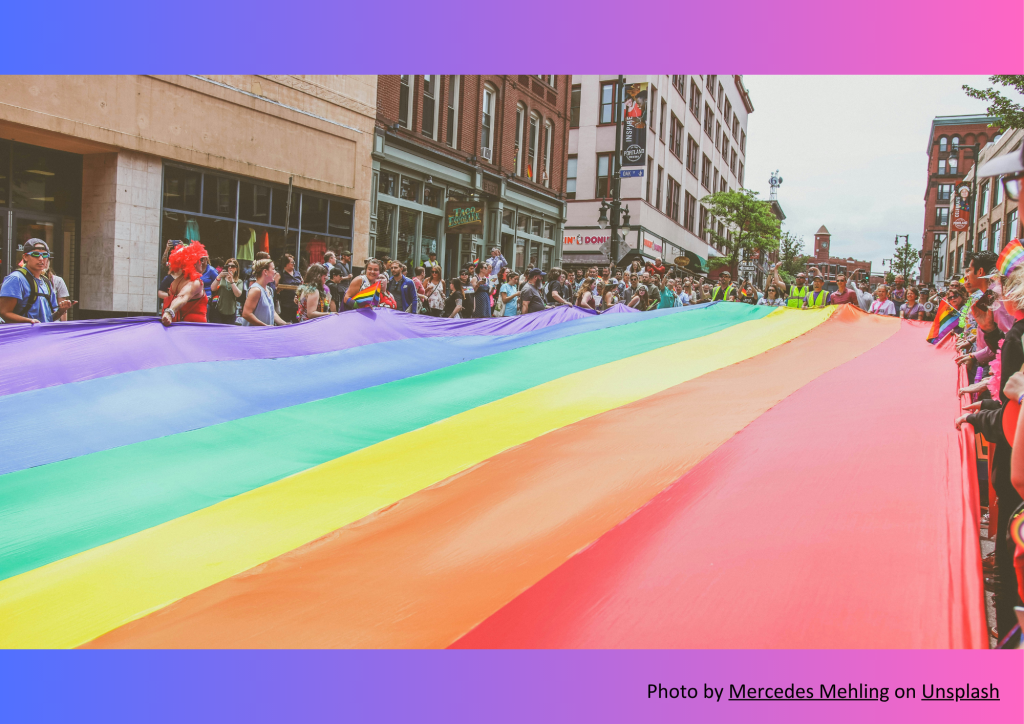
Be an Ally: How to Support the LGBTQIA+ Community
June is Pride Month which means it is the perfect time to talk about being an ally for individuals in the LGBTQIA+ community. Human Rights Campaign defines ally as “A term used to describe someone who is actively supportive of LGBTQ+ people. It encompasses straight and cisgender allies, as well as those within the LGBTQ+ community who support each other.” Being an ally involves engaging, empathizing, promoting understanding, and advocating for equal rights. Support can look like many different things; from being a trusted friend someone can confide in to standing up to discrimination and prejudice. Here are some ways you can show support for this community:
- Educate yourself: Learn about the issues and challenges faced by the community, and how to support different groups in the community. Check out this resource from the LGBTQIA Resource Center to learn how to expand your allyship.
- Use inclusive language and engage in supportive dialogue: Language matters. Some people avoid talking about sexual orientation and gender identity because they are afraid of saying the wrong thing. This glossary of terms from Human Rights Campaign provides a good overview.
- Stand up to discrimination and support LBGTQIA+ organizations
- Advocate for LGBTQIA+ inclusive policies: Use your vote and contact your representatives to support policies that protect the rights and well-being of LGBTQIA+ individuals.
- Support LGBTQIA+ youth: Let youth know that you love them no matter what and that you are a safe person to come to when things get hard.
Being an ally is also an important part of prevention. Individuals in the LGBTQIA+ community are more likely to experience mental health challenges, physical and sexual violence, and other challenges that come from discrimination and prejudice. Having a support system in place can reduce the risks associated with those challenges.
You can make a difference by committing to being an ally. There are many ways you can help. Just remember to never stop learning, ask questions, and call out discrimination when you see it. The LGBTQIA Resource Center sums it up best, “Remember that ally is a verb – actions are more powerful than words.”
Check out the links below to learn more.
Resources
American Psychiatric Association – Five Ways to Support LGBTQ+ Mental Health
Baylor College of Medicine – Becoming an ally: How to support LGBTQ individuals coming out
The Everymom – How to Support Someone You Love in the LGBTQ+ Community
Human Rights Campaign – Being an LGBTQ+ Ally
Human Rights Campaign – Glossary of Terms
LGBTQIA Resource Center – How to be an Ally
Salience Health – 10 Ways to Support the LGBTQIA+ Community

Wayne County Coalitions strives to observe the many different awareness events throughout the year that focus on mental health, substance use prevention, and other important topics. Please click on the links to learn more.
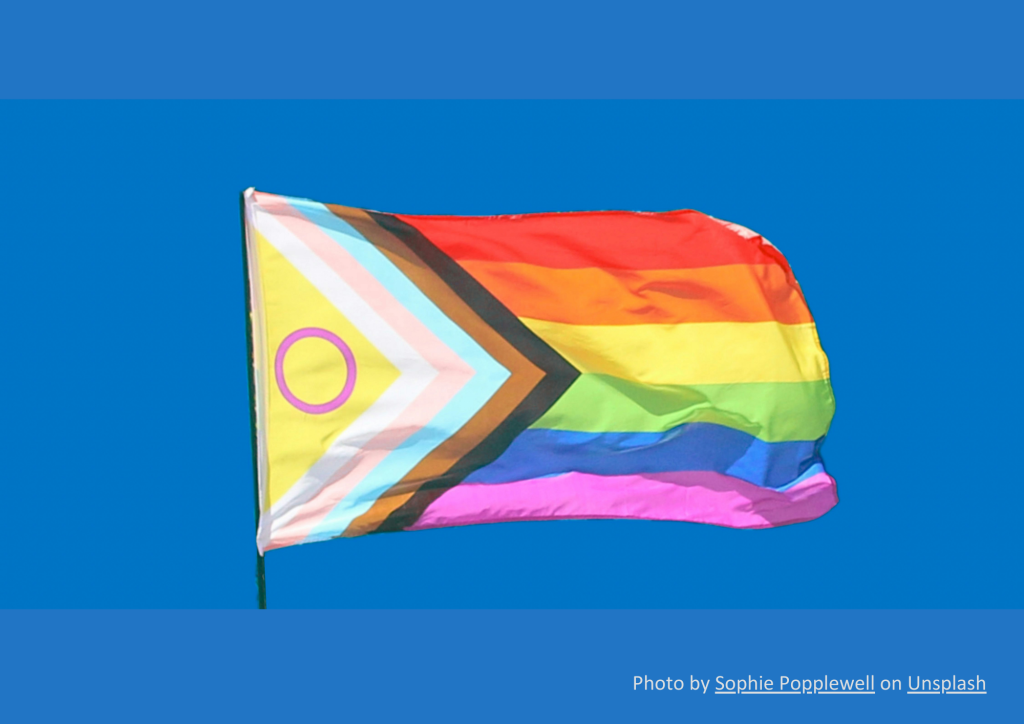
Pride Month: Pride month is annual celebration of the LGBTQIA+ community, their history, achievements, and ongoing struggle for equality. It also serves as a reminder of the importance of acceptance, diversity, and love.
DoSomething – 11 Facts About Pride and the LGBTQIA+ Movement
History – Pride Month 2026
NAMI – LGBTQ+
Stonewall Columbus Pride – 2026 Theme: Until We’re All Free
The Trevor Project – LGBTQ+ Community Resources

National PTSD Awareness Month: There are about 12 million people in the U.S. living with Post-Traumatic Stress Disorder (PTSD) according to the U.S. Department of Veterans. PTSD can impact anyone who has experienced or witnessed a traumatic event such as military combat, sexual or physical violence, natural disasters, or severe accidents.
SAMHSA – SAMHSA Recognizes Posttraumatic Stress Disorder Awareness Month
U.S. Department of Veterans Affairs – PTSD: National Center for PTSD
National Safety Month: This is the 30th anniversary of the National Safety Council’s National Safety Month. They use this month to promote safety awareness and reduce preventable injuries and deaths. This year’s topics are Moving Safety Forward, Promoting Holistic Worker Health, Staying Safe on the Roads, and Preventing Slips, Trips and Falls.
National Safety Council – June is National Safety Month

Resources
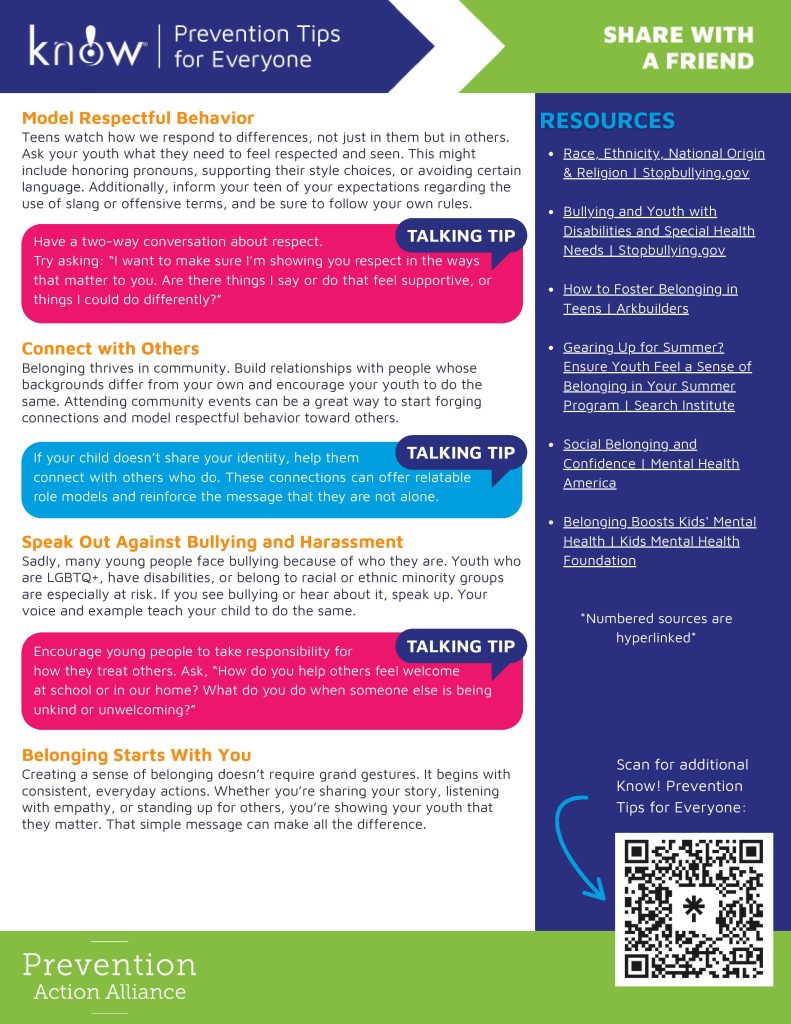
StopBullying.gov – Race, Ethnicity, National Origin & Religion
StopBullying.gov – Bullying and Youth with Disabilities and Special Health Needs
Arkbuilders Inc. – How to Foster Belonging in Teens
Search Institute – Gearing Up for Summer? Ensure Youth Feel a Sense of Belonging in Your Summer Program
Mental Health America – Social Belonging and Confidence
The Kids Mental Health Foundation – Belonging Boosts Kids’ Mental Health
Thank you for being a vital member of our community!
Please click on the link below to send this Parent Alert to a family member or friend. They will also have the opportunity to sign up to receive monthly Parent Alerts.
 |  |
Copyright © 2026 Wayne County Coalitions. All rights reserved.
Our mailing address is:
Wayne County Coalitions
c/o 104 Spink St.
Wooster, OH 44691
CoalitionsCommunication@gmail.com